Tony Takitani
Blind Willow, Sleeping WomanTony Takitani’s life is shaped by a practiced solitude: precise, self-contained work and few intimate ties leave him little prepared for either the sudden arrival of love or the loss that follows. After his wife dies, her clothes occupy a room that becomes both a material burden and a measure of what he can no longer recover. His effort to live alongside those clothes ultimately gives way to their removal, while memory itself thins until absence is what remains.
Identity and Background
Tony Takitani’s name is his real name, though his name, curly hair, and sharply sculpted features lead people to assume that he is of mixed ancestry. Both his parents are Japanese. His father, Shozaburo Takitani, is a reasonably well-known jazz trombonist who left Tokyo for Shanghai before the Second World War, after a problem involving a woman. Tony grows up in the unsettled postwar years, but his appearance does not reflect the mixed parentage others attribute to him.
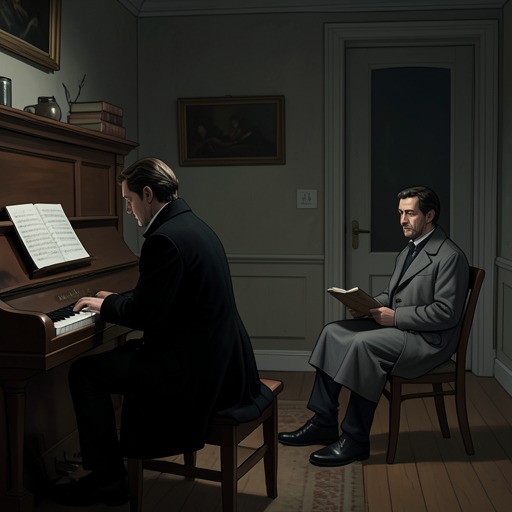
His childhood and family life reinforce self-reliance. His father is often away with the band, and Tony first has a housekeeper to care for him during the day, then learns to manage on his own. In his last years of elementary school, he cooks, locks the house at night, and sleeps alone. He does not understand this independence as loneliness: being by himself is simply more comfortable than being fussed over. Shozaburo never remarries after his wife dies, and father and son share an established solitude. They are not as distant as their lives might suggest, but neither makes the first move to speak openly; Shozaburo is poorly suited to fatherhood, and Tony to being a son.
Work and Solitude
Drawing gives Tony a clear vocation early in life. He spends hours shut away in his room, especially absorbed in pictures of machines: bicycles, radios, and engines rendered with painstaking accuracy. Even a flower is drawn in exact detail, down to the veins of its leaves. His art grades are consistently excellent, and he often wins school contests. From high school he moves to art college and then to work as an illustrator, with little uncertainty about what he should do.
That certainty sets him apart from his peers. At a time when young people are challenging authority and the Establishment, his utilitarian drawings find little favor with classmates or professors, who fault them for lacking ideological content. Tony, in turn, sees their work as immature, ugly, and inaccurate. The disagreement makes visible the narrowness and strength of his artistic attention: he is committed to exactness rather than the political expression his contemporaries prize.
In adult life, Tony can maintain ordinary, pleasant relations with people he sees regularly. He is neither arrogant nor boastful, does not make excuses for himself, and prefers to listen rather than talk about his own life. People generally like him, but his relationships rarely move beyond everyday contact. He has no close friend to whom he turns for advice or confidences. He has had several relationships, including a brief period living with a woman, but sees no need for marriage or children; he can handle cooking, cleaning, and laundry himself, or hire a housekeeper when work interferes. He sees his father only every two or three years, usually on business, and once the business is finished they have little to say. Tony imagines he will probably never marry.
Love and Marriage
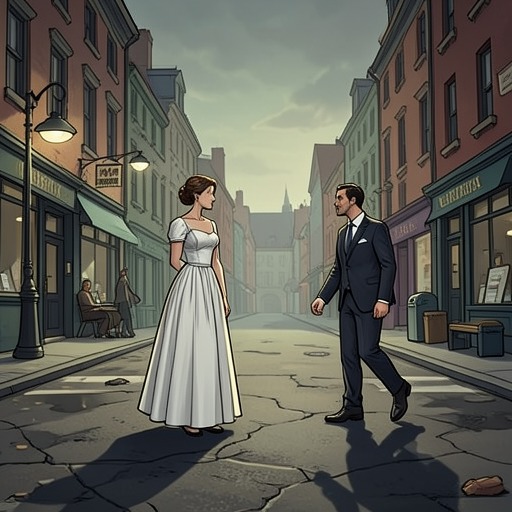
That settled expectation breaks when Tony falls in love without warning. A twenty-two-year-old part-time employee of a publishing company comes to his office to collect an illustration. She is quiet, wears a gentle smile, and is not described as conventionally beautiful, yet her presence affects him immediately and intensely. He cannot explain what has drawn him to her. He is equally struck by the way she dresses: her clothes seem to be worn with naturalness and joy, as if they have acquired a new life on her. After she thanks him and leaves with the illustration, Tony remains at his desk, dazed, until evening darkens the room.
Her clothing becomes central to the way Tony remembers and responds to her. The wardrobe is not just a collection of possessions: it is what first arrested his attention and what, after her death, remains physically present when she is gone. Their marriage therefore places his inward, self-sufficient life in contact with a form of attachment that cannot be managed as neatly as his work or his household routines.
Bereavement and the Clothes
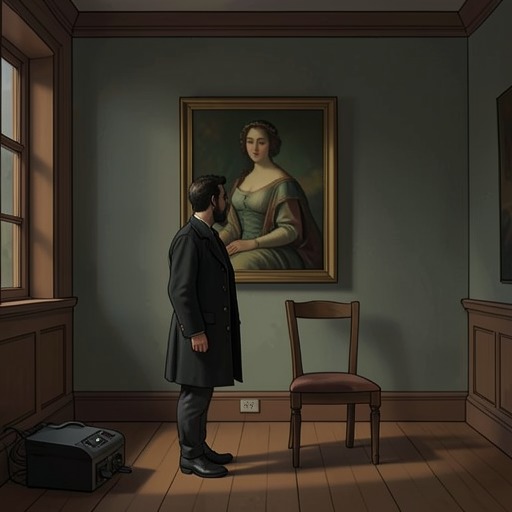
After his wife dies in a car accident, Tony is left with a room full of her size 7 dresses and 112 pairs of shoes. Unsure what to do, he sells hats and accessories to a dealer for the first price offered and burns the stockings and underthings in a garden incinerator. The many dresses and shoes remain where they are. After the funeral, he shuts himself in the large walk-in closet and spends the day looking at the rows of clothes filling it.
Ten days later, he advertises for a female assistant, specifying a dress size of 7, a height of about 161 centimeters, and shoes of size 22 centimeters. Thirteen applicants come to his studio-office in Minami-Aoyama, drawn by the unusually high salary. After rejecting five who misstate their dress size, Tony selects the applicant whose build most closely matches his wife’s. He explains that the job is ordinary office work, but asks her to wear his wife’s clothes as a kind of uniform. He presents this as a way to give himself time to adjust to his wife’s absence, not as a demand made for some other purpose.
The arrangement cannot make the loss bearable. When the chosen woman sees the clothes his wife left behind, she cries; Tony remembers her as a stranger with an unremarkable face and worn patent-leather shoes, sobbing among the dresses. He ultimately asks the dealer to take every piece of clothing. The sale brings him less than a twentieth of what he paid, but the amount no longer matters: he wants the clothes taken somewhere he will never see them again. He leaves the emptied room bare for a long time.
Memory and the Empty Room
Tony still returns to the room occasionally, sitting on the floor for an hour or two and letting his mind go blank as he looks at the bare walls. The room holds no clothes, but its emptiness remains charged by what was there. As months pass, he loses the ability to recall the garments’ colors and smells, and even the feelings he once treasured recede. Memories change and grow fainter until they seem like shadows of shadows; sometimes he can barely remember his wife’s face. The clearest residue is the sense of absence.
One memory persists with unusual force: the assistant’s quiet crying among the clothes. Even after Tony forgets her name, her image remains difficult to dislodge. The contrast gives his bereavement an unexpected shape. He cannot preserve the person he loved by keeping her wardrobe, and he cannot fully control what his mind retains after the wardrobe is gone. The room’s movement from crowded closet to empty space parallels a gradual loss of detail, while the stranger’s remembered grief survives where much of the past has faded.
Two years after his wife’s death, Shozaburo dies of liver cancer. His illness is brief, and he dies almost as if falling asleep. He leaves little property beyond cash, stock certificates, his trombone, and a large collection of old jazz records. Tony stacks the records in their moving-company cartons in the already empty room. Because they smell of mold, he periodically opens the windows to air it, but otherwise does not enter. The space thus holds a second inheritance from his father, not as a renewed bond between them but as records and an instrument left behind. Across Tony’s story, objects can survive the people attached to them, but their presence cannot restore what has disappeared.